Tuesday, June 1, 2010

Marvell's Mower and Me

As I was mowing the grass tonight, I started thinking about Marvell and his mower poems, and I wanted to reread them.  I used to hate mowing the grass.  My sister and I both did-- the stink of the gasoline, the itch of the grass blades, hidden perils like anthills and bees-- all conspired to make us fight over who had to mow.  To solve the problem, my parents fairly and squarely decided we'd set the timer (oh, the timer) and each mow ten minutes so that neither would become too fatigued.  Being the oldest, I went first, which suited me.  I got my first shift out of the way, then relaxed while Natalie toiled.  Clutching my lemonade, I thought I'd check on her progress, so I peeked out the kitchen window, and what I saw is forever etched in my mind.  There was Natalie, practically dragged by the mower, her too-big safety goggles askance, her too-big hand-me-down mowing shoes nearly falling off, crying so hard she could barely see (if seeing were even a possibility through those "safety" goggles we had to wear).  It occurred to me to laugh, but I didn't.  I was just so shocked that a person could be so upset over mowing the lawn.  Even though I hated it, too, I realized at that moment that it couldn't really be that bad.

I don't know what this has to do with the poem, except to explain that I now love to mow.  It helps a lot that we now have a reel mower (non-gasoline powered).  And I am the opposite of Marvell's speaker; to me, contemplation and mowing go hand in hand.  And, most importantly, if I am mowing, no one can mow me.  My husband tried to take over for me tonight, but I shooed him away.  "That's my job!" I said, directing him to the baby, who stood at the precipice of a newly-dug compost hole, hoe in hand.  Out there, it's just me and the grass.  Push, push, turn, push.  I love the rhythm and the exertion of it.  And I love when it's finished.  Such a clear goal with a clear endpoint.

And so, for your mowing, I mean, reading pleasure, I present Andrew Marvell's "The Mower's Song":


My mind was once the true survey
      Of all these meadows fresh and gay,
      And in the greenness of the grass
      Did see its hopes as in a glass;
      When Juliana came, and she
What I do to the grass, does to my thoughts and me.

      But these, while I with sorrow pine,
      Grew more luxuriant still and fine,
      That not one blade of grass you spy’d
      But had a flower on either side;
      When Juliana came, and she
What I do to the grass, does to me thoughts and me.

      Unthankful meadows, could you so
      A fellowship so true forgo?
      And in your gaudy May-games meet
      While I lay trodden under feet?
      When Juliana came, and she
What I do to the grass, does to my thoughts and me.

      But what you in compassion ought,
      Shall now by my revenge be wrought;
      And flow’rs, and grass, and I and all,
      Will in one common ruin fall.
      For Juliana comes, and she
What I do to the grass, does to my thoughts and me.

      And thus, ye meadows, which have been
      Companions of my thoughts more green,
      Shall now the heraldry become
      With which I shall adorn my tomb;
      For Juliana comes, and she
What I do to the grass, does to my thoughts and me.
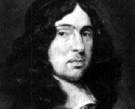
(from The Poetry Foundation website)

Sunday, May 9, 2010

Red Lion Sq.

Dear readers,

I hope you'll go check out Red Lion Sq.,


 a new venue for poetry co-edited by two Spalding MFA graduates- Amy Watkins and Jae Newman. What makes this publication so special? Format. As a "weekly podcast," the magazine's mission is to "bring the oral element back into literary poetry, making it more accessible and friendlier to a general audience." Launch date June 1. If you're a poet, consider submitting to this exciting project. If you enjoy reading poetry, you can already read some fine work on the "poems" page. Literary mags come and go, but the talent, motivation, and design behind this project make it clear that Red Lion Sq. will be an amazing magazine, as well as a significant force in spreading poetry to new audiences.


-Matthew

Wednesday, April 14, 2010

Creative Slam at the Bird House

Last Sunday, my husband and I moseyed over to The Bird House, a nature store in downtown Madison, for a "Creative Slam." It was our first time, and not sure what to expect, we brought our dish to share (cookies) and discovered that everyone else had also brought dessert. Except for the baked beans, but those were so sweet they counted as dessert too.

Anyway, it was great. Davy Crockett came and told his story, and his ghost came too, and updated us on the outcome at the Alamo. Several poets from the Green River Writers were there as well, including Anna Lucas, Ernie O'Dell, and Barb McMakin. I read three poems at first, then one more during the second hour. Paul Kelly (my dad) closed with juggling lessons. Graeme Fothegill MC'ed, and host and bird lady Kelly Misamore read a poem (by her sister) at the end. What a delight to discover this monthly event going on within walking distance of my house! If you're ever in the area, it's the second Sunday of every month.

In other news, I just found out that my poem "Hanging Laundry While Hoping for Heaven" is forthcoming in The Louisville Review. So that's exciting.

And I've been working on a novel about the Sarah Mitchell story (see earlier posts). So far, it's still in its infancy, but I love discovering the characters. Writing a novel is like walking through a maze. I have no idea where I am going while I am in it, but I know where it leads. It's just a matter of wandering through. And I'm fascinated with the issue of slavery and how it will play out: Sarah owned slaves, then became one herself, then went back to "owning" them. I look forward to exploring that psychological territory.

Finally, for inspiration and structural guidance (and just plain good company), I'm reading Sena's Four Spirits. And loving it. But more on that in a future post.

Hoping the cruelest month has not been too much so,
Jill

Saturday, March 27, 2010

Essay at Eagle Lake

The warmer weather here in Kentucky is allowing my boys and I to get out and take long walks in the woods. Sometimes those walks inspire poems, as this one, written towards the end of last summer, when everything was at its peak. Essay at Eagle Lake is forthcoming in Inscape, Morehead State University's Literary Journal. You can also read more of my published work here. Enjoy!

-Matt


Essay at Eagle Lake
Morehead, Kentucky

Twice the doe has strayed to the bottom of the hollow,

where chicory and goldenrod grow,
where tree line meets path,
and path meets water.

And twice have I met her, and once looked for her.

I have found geese as well.
I run at them just to see their excited departure.
I want to watch them fly away from my simple violence.

Of course I stumble and fall.
I’m afraid I am as my father: impatient for the infinite.

I hunger.

I look for the doe and I look at her long.
I feed on her soft doe-eyes.

I brush the gnat from my eye.
as she twitches her ear,
and stamps her hind leg to shake off the horsefly.

I never stop looking.
I cannot let go of the strange, bestial embrace of our gaze.
I fill myself like a tick until I am
satisfied as if

my blood-gorged body hung
from the white fur of her belly.

We are in this world together for a moment
and then she is gone,
bounding away like she was made for this dream.

I must return, too.
Of course I recite these lines to myself along the way.
I do not want to forget them.

These things are valuable to me:
the doe, the geese, the purple and yellow of the chicory and the goldenrod.

It is because I can use them again and again
that I emerge from the woods like a madman, a gadabout, a poetaster,
dirt-drenched and sweating, mumbling, always
mumbling to myself.

Monday, March 8, 2010

New Poem


We missed February (well it was short and snowy, what can I say?), but I have high hopes for March.

I thought I'd just post my brand newest poem, which is always a risky venture, but it has been vetted by my brand newest writing partner. We meet Monday mornings and share whatever's presentable or new and exciting. So here it is, after one round of revisions. Thoughts and comments are welcome and appreciated.

Happy almost-Spring!!
jk


In The Moment Before The Teacup Hits the Floor, I Think of Lao Tzu

Just like that I dropped it
almost like I meant to do it
the teacup from my grandfather’s house

It probably belonged to my grandmother,
though. It was an M. A. Hadley,
sort of special, not too fancy, just homey.

In fact, there was a picture of a little home
painted on it in blues and greens.
The cloud next to the little home

was loopy and swirly in its porcelain sky.
At the bottom of the cup, it said,
“The End.”

I was thinking all of this as I mourned
for that little cup,
on its way down, containing

a column of clear air,
cupping cups-full in infinitely
minute spaces of time and then

letting each go, infinitely.
I suppose I felt a small—tiny, imperceptible maybe—
surge of relief as it smashed

a satisfying noise and a satisfying
pattern: the shards exploded radially
as petals from their stamen.

“Oh wait!” I said, trying to ward off
my oncoming thirteen month old daughter
“Wait! Mommy needs to clean this up.”

But she didn’t listen. “Uh-oh,”
she said. “I know, it’s sad,” I said.
“Hug,” she said, and did.

For a moment, I held two big pieces
together, contemplating crazy glue
but I didn’t want to be reminded

of my failure to hold on
or of my grandfather’s gap-toothed mouth
so I dropped the pieces

into a plastic bag and tied them up tight
so as not to cut the hands
of the men who collect our trash.

Tuesday, January 19, 2010

Maternity in Plath's "The Arrival of the Bee Box"

I've always been incredibly fascinated with Plath's bee poems, and “The Arrival of the Bee Box” is one of my favorites. Plath's ability to instill these small insects with so much richness and complexity beyond the surface narrative tells us much about her vast poetic talent. There’s a lot going on here to work with. There’s certainly some racial tension at work in this poem with the repetition of “black” and the juxtaposition of “Caesar” and “African hands” (ll. 15, 22, 13). On another level, the poem also seems to operate as an extended metaphor for the speaker’s conflicted sense of maternity. The personification of the bees, coupled with the speaker’s anxieties regarding their dependence and independence (from her) produces a specific relationship in the poem which resembles (an admittedly dysfunctional) relationship between a mother and her children.

The bees are not only personified in this poem, they are personified as children. In the first stanza, the speaker compares the box to the “coffin of a midget / or a square baby,” (ll. 3-4) but quickly refutes the notion that the inhabitants are dead with the realization of the noise they create. Their noise is further examined and personified in the following stanzas. In stanza four, “the unintelligible syllables” are closer to an infant’s babbling than the buzzing of bees one would expect. “Syllables” especially, evokes the sense of a human noise.

Such personification is further informed by the speaker’s strange desire to both care for these insects and be free of such a responsibility. The white space between stanzas five and six becomes an intense place of meditation between these two extremes. In the final line of stanza five, the speaker realizes her authority over the creatures as she declares that “They can die, I need feed them nothing, I am the owner” (l. 25). In the first line of stanza six, however, she questions the basic needs of the bees, and in doing so, asserts her own responsibility as nurturer: “I wonder how hungry they are” (l. 26).

The ultimate product of such tension is the speaker’s decision to “set them free” as she acknowledges her inability to provide for them: “I am no source of honey” (ll. 35, 33). The final foreboding line, “The box is only temporary,” distills the speaker’s dark realization into an equally dark and vaguely suicidal resolution (l. 36).


Thanks for reading,
-Matthew


The Arrival of the Bee Box

I ordered this, clean wood box
Square as a chair and almost too heavy to lift.
I would say it was the coffin of a midget
Or a square baby
Were there not such a din in it.

The box is locked, it is dangerous.
I have to live with it overnight
And I can't keep away from it.
There are no windows, so I can't see what is in there.
There is only a little grid, no exit.

I put my eye to the grid.
It is dark, dark,
With the swarmy feeling of African hands
Minute and shrunk for export,
Black on black, angrily clambering.

How can I let them out?
It is the noise that appalls me most of all,
The unintelligible syllables.
It is like a Roman mob,
Small, taken one by one, but my god, together!

I lay my ear to furious Latin.
I am not a Caesar.
I have simply ordered a box of maniacs.
They can be sent back.
They can die, I need feed them nothing, I am the owner.

I wonder how hungry they are.
I wonder if they would forget me
If I just undid the locks and stood back and turned into a tree.
There is the laburnum, its blond colonnades,
And the petticoats of the cherry.

They might ignore me immediately
In my moon suit and funeral veil.
I am no source of honey
So why should they turn on me?
Tomorrow I will be sweet God, I will set them free.

The box is only temporary.


Plath, Sylvia. “The Arrival of the Bee Box.” Anthology of Modern American Poetry. Ed. Cary Nelson. New York: Oxford UP, 2000. 531. Print

Thursday, December 31, 2009

Goodbye, Hello


On the last day of 2009, John Keats comes to mind. Yesterday morning, my grandfather passed away after a long struggle with Alzheimer's. One of his favorite things to tell me, when he was still able, was, "Life is a search for truth and beauty." This advice struck me as inspiring or infuriating, depending on the stage of life I was in at the time it was given. I wonder whether my grandfather would say he had found the objects of his quest. I never asked while he could answer.

While searching for John Keats' answer, I found Albert Einstein's: “The pursuit of truth and beauty is a sphere of activity in which we are permitted to remain children all our lives.”

And now Keats:

Ode on a Grecian Urn

Thou still unravish'd bride of quietness,
Thou foster-child of Silence and slow Time,
Sylvan historian, who canst thus express
A flowery tale more sweetly than our rhyme:
What leaf-fringed legend haunts about thy shape
Of deities or mortals, or of both,
In Tempe or the dales of Arcady?
What men or gods are these? What maidens loth?
What mad pursuit? What struggle to escape?
What pipes and timbrels? What wild ecstasy?

Heard melodies are sweet, but those unheard
Are sweeter; therefore, ye soft pipes, play on;
Not to the sensual ear, but, more endear'd,
Pipe to the spirit ditties of no tone:
Fair youth, beneath the trees, thou canst not leave
Thy song, nor ever can those trees be bare;
Bold Lover, never, never canst thou kiss,
Though winning near the goal—yet, do not grieve;
She cannot fade, though thou hast not thy bliss,
For ever wilt thou love, and she be fair!

Ah, happy, happy boughs! that cannot shed
Your leaves, nor ever bid the Spring adieu;
And, happy melodist, unwearièd,
For ever piping songs for ever new;
More happy love! more happy, happy love!
For ever warm and still to be enjoy'd,
For ever panting, and for ever young;
All breathing human passion far above,
That leaves a heart high-sorrowful and cloy'd,
A burning forehead, and a parching tongue.

Who are these coming to the sacrifice?
To what green altar, O mysterious priest,
Lead'st thou that heifer lowing at the skies,
And all her silken flanks with garlands drest?
What little town by river or sea-shore,
Or mountain-built with peaceful citadel,
Is emptied of its folk, this pious morn?
And, little town, thy streets for evermore
Will silent be; and not a soul, to tell
Why thou art desolate, can e'er return.

O Attic shape! fair attitude! with brede
Of marble men and maidens overwrought,
With forest branches and the trodden weed;
Thou, silent form! dost tease us out of thought
As doth eternity: Cold Pastoral!
When old age shall this generation waste,
Thou shalt remain, in midst of other woe
Than ours, a friend to man, to whom thou say'st,
"Beauty is truth, truth beauty," —that is all
Ye know on earth, and all ye need to know.

In Memoriam: Thomas Matthew Kelly, 4/17/20- 12/30/09