I’ve very interested in James Wright's poetry, particularly as it functions on a physical level. "A Blessing," especially, hits me somewhere between my heart and my stomach, and not without reason. Notice the physical language in the poem: the eyes of the ponies that darken with kindness, how they ripple tensely, bow, munch the young tufts, the speaker's desire "to hold the slenderer one in my arms," when it nuzzles his left hand, her mane, her forehead, "her long ear that is delicate as the skin over a girl's wrist." On one level, "A Blessing" is a meditation on and celebration of the beauty of the anatomy of these two ponies, and by comparison (girl's wrist), a celebration of our own bodies. But with the last three lines, the poem becomes more than observation: "Suddenly I realize / That if I stepped out of my body I would break / Into blossom." With this admission, the poem becomes a record, or document of ecstasy. It plots the events that lead to the speaker's immense joy when he is able to step outside of himself, (or at least imagine that he is able to step out of himself). But what makes the poem so powerful, is that it allows the reader to take this journey as well, to experience a small piece of ecstasy, a blessing when we are nowhere near the highway, Rochester, or the two ponies.
It’s an amazing poem, one that cannot be read without some physical response. I’d love to know how it felt for you. Perhaps the hairs on your arms stood up, or the brick in your chest seemed a little lighter. Use the comments link and let me know.
A Blessing
Just off the highway to Rochester, Minnesota,
Twilight bounds softly forth on the grass.
And the eyes of those two Indian ponies
Darken with kindness.
They have come gladly out of the willows
To welcome my friend and me.
We step over the barbed wire into the pasture
Where they have been grazing all day, alone.
They ripple tensely, they can hardly contain their happiness
That we have come.
They bow shyly as wet swans. They love each other.
There is no loneliness like theirs.
At home once more, they begin munching the young tufts of spring in the darkness.
I would like to hold the slenderer one in my arms,
For she has walked over to me
And nuzzled my left hand.
She is black and white,
Her mane falls wild on her forehead,
And the light breeze moves me to caress her long ear
That is delicate as the skin over a girl's wrist.
Suddenly I realize
That if I stepped out of my body I would break
Into blossom.
Monday, October 13, 2008


Tuesday, October 7, 2008
Web Resource: The Kelly Writers House
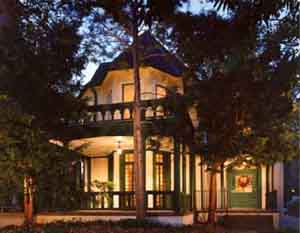
A recent email update from the Kelly Writers House at the University of Pennsylvania put me in mind again about this fabulous resource. Their latest innovation is live webcam directly from the Writers House so that anyone with internet access can tune in (log on?) and participate. This afternoon, for example, you can join podcast host Al Filries (director of KWH) and members of the poetics community for PoemTalk as they record episode 15 featuring Lyn Hejinian's "constant change figures." Each episode of PoemTalk centers around a single poem from the PennSound archive. PennSound is "an ongoing project, committed to producing new audio recordings and preserving existing audio archives," and is a resource in its own right.
A tiny taste of what else goes on at KWH, from their website: "Conceived in the communitarian spirit, the Writers House provides a warm and welcoming home within Penn's pre-professional culture for wild freethinkers, capacious scholars, voracious readers, and creative writers of all styles and stripes. We host an almost outrageous array of writing-related projects, programs, and activities for the Penn and Philadelphia communities: tutoring and literacy outreach projects, reading and writing groups, classes and workshops, book parties and book drives, poetry readings and open mic nights, catered dinners and impromptu coffee klatches."
Also this month at the KWH: L.A. Banks, Jim Shepherd, and more Poem Talk focusing on "I Know a Man," by Robert Creeley. I urge you to browse their website (you will find a link in our feature links list) and join in some of the exciting events happening there. And if you live near Philly or are passing through, make a point of visiting. It is an inspiring community of writers thriving and thinking and creating together. We should all strive to make our own little version of the Writers House wherever we are, be it a writers cabin or even a pup-tent. Make a space for creativity and then invite someone else in.
(Note: The namesake of KWH is no relation to me, Jill Kelly Koren.)
Thursday, October 2, 2008
Guest Post: Playwright Heather Jones

The Poetic is Dramatic: Poetry Punctuation Strategies in Dramatic Dialogue
Note: You should read the poetry and play selections aloud.
Part 1: line breaks
A really brief discussion of lines and the things poets and playwrights can do with them.
In his poetry dictionary, John Drury says that a line is “like a melodic phrase, lasting a certain length before the piece “turns” to the next line or ends” (159). The difference between the turn of the line in prose and poetry is basically that a prose line always turns when it reaches the margin of the page. In poetry, the poet chooses where to turn the line—or make a line break. Drury quotes Denise Levertov as saying that the line break is “roughly a half-comma in duration….a crucial precision tool [that] can record the slight (but meaningful) hesitations between word and word…”(Drury 160)
One thing we can do with line breaks is enjamb them. The poetry dictionary tells us that enjambment is “The use of a line whose sense and rhythmic movement continues to the next line.” It goes on to say, “Enjambment is like musical syncopation; instead of pausing, the musical phrase pushes ahead. Enjambment speeds up the movement and quickens the pace.” It can also call attention to the last word of one line and the first word of the next. The poetry dictionary says that “Enjambment may quicken the pace over end-stopping—but not always. Robert Creeleys’s poems often have lines broken after an article, which imposes at least a slight pause, a musical effect that slows down the movement.” (116) , as in this poem, “A Reason”:
Each gesture
is a common one, a
black dog, crying, a
man, crying.
A playwright can also experiment with where they turn lines and with enjambment, and have, at least as far back as Shakespeare.
Here, from Macbeth:
I pull in resolution, and begin
To doubt th’ equivocation of the fiend
that likes like truth[…]
Dramatic verse went out of fashion with the advent of playwrights like Ibsen who introduced a more realistic and conversational style to dramatic dialogue. Recently, though, playwrights have begun to introduce poetic moments into their plays, moments that are meant to stand out from the naturalistic and realistic and show us the interior or the metaphysical—what is not readily apparent in real life.
Here is an example of enjambment from Erik Ehn’s Polio comes from the Moon (Bernadette), part of his series of Saint Plays
Lianne Maille: Polio comes from the moon
On gray-green bee wings
Settling on red petals
An ash unseen
Here Ehn makes images the emphasis of the first part of the dialogue, with the more abstract ash unseen at the bottom. In this case, the two voices might function like a chorus, witnessing and interpreting the action. The enjambed dialogue forces us to pause on the images, to see what might not be on the stage.
Heather Jones is a playwright, writing mentor and creativity coach based in Asheville, NC. A link to her blog, Brainstorm!!, can be found in the featured links list to the left.
(photo Robert Creeley in Providence, Jan. 2004; by Joel Kuszai)
Monday, September 22, 2008
Robert Bly's Treatment of the Domestic in "For My Son, Noah, 10 Years Old"

I have to admit, I haven't read much of Robert Bly's work, so I was happy to run across his poem "For My Son, Noah, Ten Years Old."
The manuscript I'm currently working on focuses much of its attention on the domestic sphere and it's exciting to see another poet writing on the subject. There is a specific difficulty inherent in the task of writing about family. I believe it requires the poet to examine his/her success, but also failure as a parent/spouse.
“For My Son, Noah, 10 Years Old” depicts a father/son relationship, and the tranquility created by that relationship. I’m interested in the way Bly sets up this moment. In my own poems, I tend to begin with a textual representation of the domestic and use this representation as a lens to explore/understand relationships/concerns of the outside/undomestic. In “For My Son,” Bly has done the opposite, describing various elements of the natural world before focusing in on the tenderness of the time a father spends with his son. There’s a deep conflict here between the elements of the natural/outside world and the tasks the father and son enjoy together: “but what is primitive is not to be shot out into the night and the dark.” For Bly, the work of the artist and the child are inherently original and distinctly separate from the horse, the chicken, the barn, and the lumber pile.
It’s a beautiful poem and I hope you enjoy the read. Also, if you run across any other poems which seek to depict or represent domestic concerns, please post here or e-mail mavett01@moreheadstate.edu. I’d love to hear from you. Have a good week!
For My Son Noah, Ten Years Old
By Robert Bly
Night and day arrive and day after day goes by,
and what is old remains old, and what is young remains
young and grows old,
and the lumber pile does not grow younger, nor the
weathered two-by-fours lose their darkness,
but the old tree goes on, the barn stands without help so
many years,
the advocate of darkness and night is not lost.
The horse swings around on one leg, steps, and turns,
the chicken flapping claws onto the roost, its wings whelping
and whalloping,
but what is primitive is not to be shot out into the night and
the dark.
And slowly the kind man comes closer, loses his rage, sits
down at table.
So I am proud only of those days that we pass in undivided
tenderness,
when you sit drawing, or making books, stapled, with
messages to the world...
or coloring a man with fire coming out of his hair.
Or we sit at a table, with small tea carefully poured;
so we pass our time together, calm and delighted.
Tuesday, September 16, 2008
Haiku Guru Barry George

First, apologies for the lateness of this post; we were hit by the remnants of Ike pretty hard and are still without power. I am braving the vagaries of dial-up internet to send this!
And now, to our featured poet for the week: Barry George, a master of haiku and other Japanese forms. He is also featured on Cornell University's Mann Library daily haiku website. Check out this link: http://haiku.mannlib.cornell.edu/category/author/barry-george to read his work and to browse the archives.
Barry says he is "drawn to haiku as a way to give attention and expression to immediate perceptions." What amazes me about his haiku is the seemingly impossible combination of the economic use of words with the largeness of image evoked by each poem. Please read and enjoy!
(photo by Marsh Muirhead)
Monday, September 8, 2008
A Short Lesson in Metaphor
One way to examine metaphor is to break it down into two distinct elements: tenor and vehicle. I.A. Richards first used these terms, but I think that they are pretty standard in contemporary analysis/criticism. The tenor is the subject of the metaphor, and normally the subject within a sentence in a poem. The vehicle is usually the predicate nominative, and “carries” the subject. If you’re a math person it might be easier to envision the metaphor as an equation:
A(Tenor)=B(Vehicle)
Anorexic
Eavan Boland
Flesh is heretic.
My body is a witch.
I am burning it.
Yes I am torching
her curves and paps and wiles.
They scorch in my self denials.
How she meshed my head
in the half-truths
of her fevers
till I renounced
milk and honey
and the taste of lunch.
I vomited
her hungers.
Now the bitch is burning.
...
In other news, a poem of mine originally published in the Spring 2008 issue of The Louisvile Review has been selected to be featured in American Life in Poetry. Sponsored by The Poetry Foundation, Library of Congress, and the University of Nebraska at Lincoln, and edited and founded by former U.S. Poet Laureate Ted Kooser, ALP "provides newspapers and online publications with a free weekly column featuring contemporary American poems." I'm really excited to be a part of this project.
Monday, September 1, 2008
Endings
In my editorial work I am learning the importance of endings. I can be reading along, enjoying the
language and the cadence of a poem very much, eager to follow where the poet leads. And then I come to the end and pfft. Nothing to hold onto. No surprise. No door to re-enter the poem with a new understanding. And I realize that many of my poems are this way: I begin with a vague idea of where things are going, but never quite get there. I guess this becomes a revision issue. I must learn to write beyond the vagueness to find that surprising connection or the germ of the seed for which I've been digging. Otherwise, both reader and poet are left floating in a fog. It might be a beautiful fog, but a fog nonetheless.
Here is one of my favorite endings by Simon Armitage in his poem "The Shout":
We went out
into the school yard together, me and the boy
whose name and face
I don't remember. We were testing the range
of the human voice:
he had to shout for all he was worth,
I had to raise an arm
from across the divide to signal back
that the sound had carried.
He called from over the park-- I lifted an arm.
Out of bounds,
he yelled from the end of the road,
from the foot of the hill,
from beyond the look-out post of Fretwell's Farm--
I lifted an arm.
He left town, went on to be twenty years dead
with a gunshot hole
in the roof of his mouth, in Western Australia.
Boy with the name and face I don't remember,
you can stop shouting now, I can still hear you.
The poem begins in narrative with a relatively simple childhood recollection. The reader follows; suspense builds-- when will the voice no longer be heard? And the ending comes as a total shock: the voice is still being heard. As Kathleen Driskell said in her lecture this past May, the mark of a good poem is that one is compelled to re-enter it. After reading this last line, who can resist returning to the title and the first lines to find out what a second reading will yield with this new knowledge? I cannot. In fact, I often find myself thinking of those last lines.
Now to return to my own work, with an eye toward taking that step from vagueness to statement, from plain narrative to metaphorical significance.
And here's a little bonus video so you can get a taste of Simon Armitage's voice. He's reading a sonnet.
language and the cadence of a poem very much, eager to follow where the poet leads. And then I come to the end and pfft. Nothing to hold onto. No surprise. No door to re-enter the poem with a new understanding. And I realize that many of my poems are this way: I begin with a vague idea of where things are going, but never quite get there. I guess this becomes a revision issue. I must learn to write beyond the vagueness to find that surprising connection or the germ of the seed for which I've been digging. Otherwise, both reader and poet are left floating in a fog. It might be a beautiful fog, but a fog nonetheless.
Here is one of my favorite endings by Simon Armitage in his poem "The Shout":
We went out
into the school yard together, me and the boy
whose name and face
I don't remember. We were testing the range
of the human voice:
he had to shout for all he was worth,
I had to raise an arm
from across the divide to signal back
that the sound had carried.
He called from over the park-- I lifted an arm.
Out of bounds,
he yelled from the end of the road,
from the foot of the hill,
from beyond the look-out post of Fretwell's Farm--
I lifted an arm.
He left town, went on to be twenty years dead
with a gunshot hole
in the roof of his mouth, in Western Australia.
Boy with the name and face I don't remember,
you can stop shouting now, I can still hear you.
The poem begins in narrative with a relatively simple childhood recollection. The reader follows; suspense builds-- when will the voice no longer be heard? And the ending comes as a total shock: the voice is still being heard. As Kathleen Driskell said in her lecture this past May, the mark of a good poem is that one is compelled to re-enter it. After reading this last line, who can resist returning to the title and the first lines to find out what a second reading will yield with this new knowledge? I cannot. In fact, I often find myself thinking of those last lines.
Now to return to my own work, with an eye toward taking that step from vagueness to statement, from plain narrative to metaphorical significance.
And here's a little bonus video so you can get a taste of Simon Armitage's voice. He's reading a sonnet.
Subscribe to:
Posts (Atom)